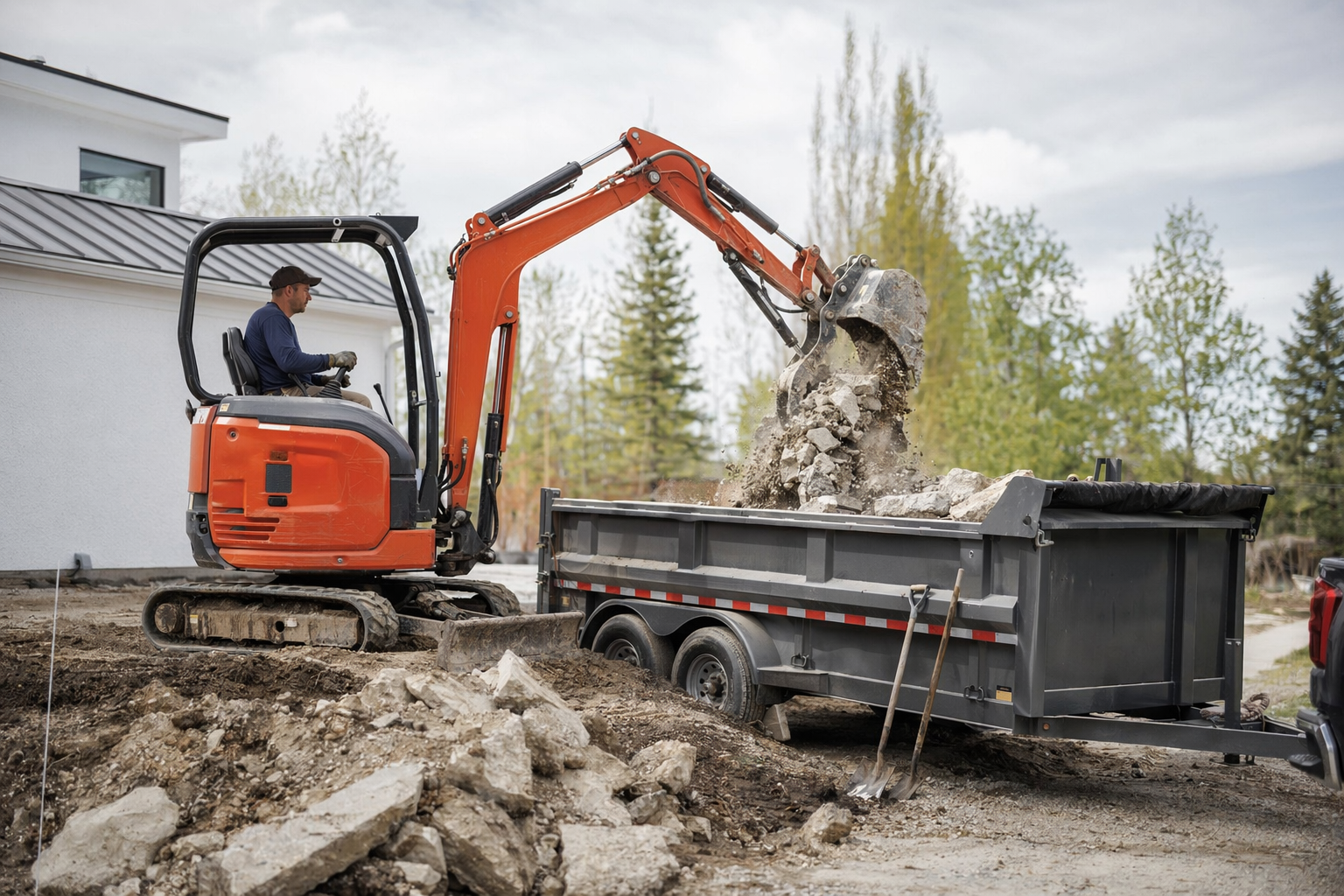
If you need a shed, patio, slab, or other heavy material removed, this work usually includes demolition, loading, haul-off, and site cleanup.
What this work involves
Demolition and debris hauling can include removing a shed, detached garage, fence, deck, mobile home pad, old retaining wall, asphalt, broken concrete, or a cracked patio or driveway section. On many jobs, the crew uses hand tools, saws, breakers, a skid steer, mini-excavator, or larger excavator to take the structure apart, separate materials, and load trucks or dumpsters.
Concrete and slab removal often starts with saw-cutting, breaking the slab into manageable pieces, and hauling it off for disposal or recycling. If there is a footing, thickened edge, or buried concrete below grade, removal may go deeper than expected. After demolition, the contractor may backfill the area with approved fill, compact in lifts, and leave it at rough grade or finish grade depending on your next step.
A good contractor also plans for dust control, utility safety, and site protection. That can include wetting material during breaking, setting up barriers, protecting nearby pavement or landscaping, and using erosion control such as a silt fence if soil will be exposed. Before any digging or removal, always call 811 to have underground utilities marked.
Disposal matters too. Different materials may need different handling, especially treated wood, painted debris, roofing, metal, concrete, or mixed construction waste. If the work could involve older hazardous materials, the contractor should explain what they can and cannot handle and whether specialized testing or abatement is needed before demolition begins.
Signs you need it
You may need demolition and haul-off if a structure is unsafe, unusable, rotting, leaning, badly cracked, or in the way of a new project. Common examples are an old shed blocking a new building pad, a broken patio that holds water against the house, or a slab that needs to come out before land grading or drainage work can happen.
Other signs include tripping hazards, spalled concrete, exposed rebar, repeated settlement, or piles of debris left after a storm, renovation, or partial teardown. If you have standing water, poor drainage, or soil erosion around the area, removal and regrading may need to happen together so the site can drain with positive slope away from the foundation.
You may also need help if the material volume is simply too much to handle yourself. Concrete, dirt, and mixed debris add up fast. Contractors often estimate volume in cubic yards, and even a small structure can create several truckloads once broken down and loaded.
What it typically costs
Costs depend on what is being removed, how heavy it is, access to the site, disposal fees, and whether the contractor must break up buried material or backfill afterward. Typical ranges for small-structure demolition and debris hauling are often about $1,500 to $8,000+, while larger detached structures or difficult tear-outs can run higher.
Concrete and slab removal is often priced by square footage, thickness, reinforcement, and haul-off weight. A small patio or walkway section may fall around $1,000 to $3,500. Larger driveways, garage slabs, thick reinforced concrete, or footings can move into the $3,000 to $10,000+ range. If the site needs imported fill, compaction, rough grading, finish grading, or topsoil after removal, that is usually an added cost.
Debris hauling by itself may be charged by truckload, dumpster size, labor time, or material type. Clean concrete can price differently from mixed demolition waste. Tight access, hand demolition, stairs, long carry distances, dust-control needs, and permit requirements can also raise the total.
These are typical ranges, not quotes or guarantees. For more pricing background, visit costs. A contractor should explain what is included, such as demolition, loading, haul-off, dump fees, recycling, backfill, compaction, and final cleanup.
How to choose the right contractor
Look for a contractor with the right license for your area and project scope, plus active insurance and bond coverage where required. Ask whether they regularly handle small-structure demolition, slab removal, haul-off, and site restoration. It is smart to verify credentials yourself and confirm who will actually perform the work.
Get a written scope that clearly lists:
- What is being removed
- Whether foundations, footings, or below-grade concrete are included
- How debris will be loaded, hauled, and disposed of
- Whether backfill, compaction, rough grade, finish grade, topsoil, or seed is included
- Who handles permits if needed
- How dust control, erosion control, and site protection will be managed
Ask practical questions about equipment and access. A mini-excavator or skid steer may work for a backyard gate, while larger machines may be needed for thick slabs or faster production. If nearby structures, slopes, or deeper excavation are involved, ask how they will protect the site. In some cases, shoring or other safety measures may be necessary.
You can also ask for help understanding bids before you hire. Gradeline does not perform demolition or give engineering, structural, or legal advice, but we can help you compare scopes and how to choose an excavation contractor. And before any digging starts, make sure 811 has marked utilities.
Get matched, free
Gradeline helps property owners understand excavation, grading, demolition, and hauling work and get matched with vetted local contractors. We are a free matching and education service. We do not perform the work ourselves.
Tell us what you need removed, about how large it is, what material is involved, whether there is concrete, a slab, or footings, and whether you want haul-off only or cleanup and grading too. Photos help, but you only need to share basic project and contact details so we can help with the next step.
If your project may also need drainage, regrading, a swale, culvert, French drain, or a new building pad after demolition, mention that too so you can be matched more accurately. Start here: Get matched.