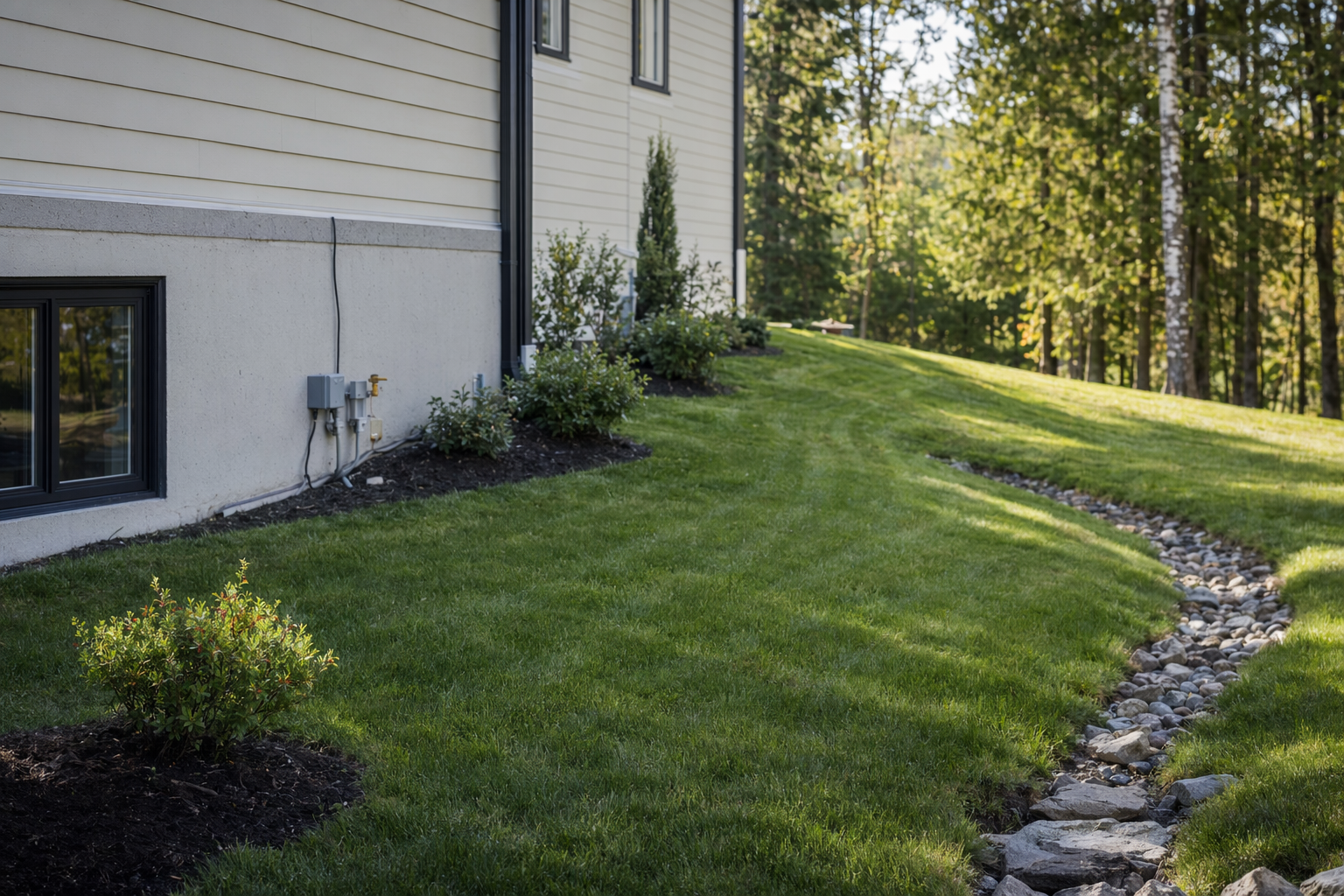
Good grading means the ground slopes so water leaves your house instead of collecting around it.
The short answer
Grading is the process of cutting high spots, filling low spots, and shaping soil so the ground drains the way it should. Drainage is the path water takes after rain, snowmelt, or irrigation. Around a house, the goal is usually a positive slope away from the foundation so water does not sit against the walls, seep into a crawl space, or stress a basement.
A grading job can be as simple as reworking a few problem areas with a skid steer and topsoil, or as involved as reshaping a whole lot with cut and fill, haul-off, compaction, swales, culverts, and erosion control. Contractors may rough grade first to establish the general shape, then finish grade later for the final surface before seed, sod, gravel, or hardscape.
Water should move away from the home and then toward a safe discharge area, such as a swale, drainage easement, ditch, or other approved outlet. In some cases, a French drain or catch basin is part of the plan, but drainage products do not replace proper slope. The ground itself should already be doing most of the work.
If you are planning a driveway, patio, building pad, or foundation work, grading matters even more. Surface water, footing depth, soil stability, and compaction all affect how the site performs over time. Gradeline is a free education and matching service. We can help you understand the scope and get matched with licensed, insured, bonded local contractors through [/get-matched/] or learn more about land grading services.
What to look for
Start with the signs on your property after a rain. Look for puddles near the foundation, mulch washed out of beds, muddy strips where water runs hard, standing water in the yard, damp basement walls, or a downspout that dumps right back toward the house. These are clues that the existing grade is flat, reversed, or sending water to the wrong place.
A good grading setup usually includes:
- Positive slope away from the foundation
- No low spots that trap water near the house
- Downspouts that discharge away from the structure
- Swales to guide water across the yard when needed
- Erosion control such as silt fence, straw, or stabilized soil on disturbed areas
- Compacted fill in lifts, not loose piles of dirt dumped and spread once
Ask what material will be used. Topsoil is good for final surface growth, but it is not the same as structural fill. Fill used to build up grade should be suitable for compaction, placed in layers, and compacted properly. Then a top layer of topsoil can be added for seed or sod. If the project involves a building pad, driveway base, or areas near footings, compaction matters a lot.
Also ask how the contractor plans to measure grade. On larger jobs, crews may use laser levels, string lines, grade stakes, or transit equipment to verify slope and elevations. On smaller residential projects, clear layout still matters. If water has nowhere to go after the reshaping, the problem may just move from one corner of the yard to another. You can read more about project planning in our guides and compare typical cost ranges.
Common mistakes
One common mistake is adding soil right against the house without thinking about moisture, siding clearance, or termite inspection space where applicable. Raising grade too high can create new problems even if the slope looks better. Water should move away from the foundation, but the final height near the structure still has to respect the building details.
Another mistake is using the wrong material. Loose organic soil, stumps, roots, or construction debris buried in fill can settle later. That can leave dips and reverse slope after the first wet season. Good grading often uses compactable fill first, then topsoil at the surface. On some jobs, haul-off is needed because there is too much excavated material or the soil on site is not suitable.
A third mistake is trying to solve everything with a drain pipe. French drains, channel drains, and culverts can be useful, but they should support the grading plan, not replace it. If the yard still pitches toward the house, a drain may clog, overflow, or simply move water too slowly during heavy storms.
Finally, some homeowners skip permits, utility locating, or erosion control. Depending on the scope, a grading project may affect setbacks, drainage patterns, retaining walls, or nearby properties. Always call 811 before any digging to have utilities marked. If the work is near a slope, deep excavation, footing area, or trench, ask the contractor how they will handle safety, including shoring if needed, and whether any permit or inspection applies.
Next steps
If you think your yard has a grading or drainage problem, start simple. Walk the property during or right after a rain if it is safe to do so. Take photos of puddling, erosion, downspout discharge, and any spots where water stands near the home. Mark problem areas on a rough sketch of the lot. This helps a contractor understand the water path.
Then gather the basics:
1. Where does water collect?
2. Where should it discharge instead?
3. Are there gutters and downspouts, and where do they end?
4. Is the project just finish grading, or does it need excavation, cut and fill, or drainage features?
5. Will access allow a mini-excavator, skid steer, or dump truck?
When you talk with contractors, ask how they would approach rough grade versus finish grade, what material they would bring in, whether haul-off is likely, and how they will confirm the final slope. If the area is large, you can ask for the estimated cubic yards of fill or spoil. If the project affects a building pad, driveway, retaining wall area, or foundation work, ask whether additional design or engineering may be needed from a qualified professional.
Gradeline does not perform grading work or give engineering, structural, or legal advice. We are a free service that helps property owners understand the job and get matched with vetted local contractors. For help with your project, visit [/get-matched/] and share a few details. Always hire licensed, insured, bonded contractors, verify credentials yourself, and call 811 before digging.