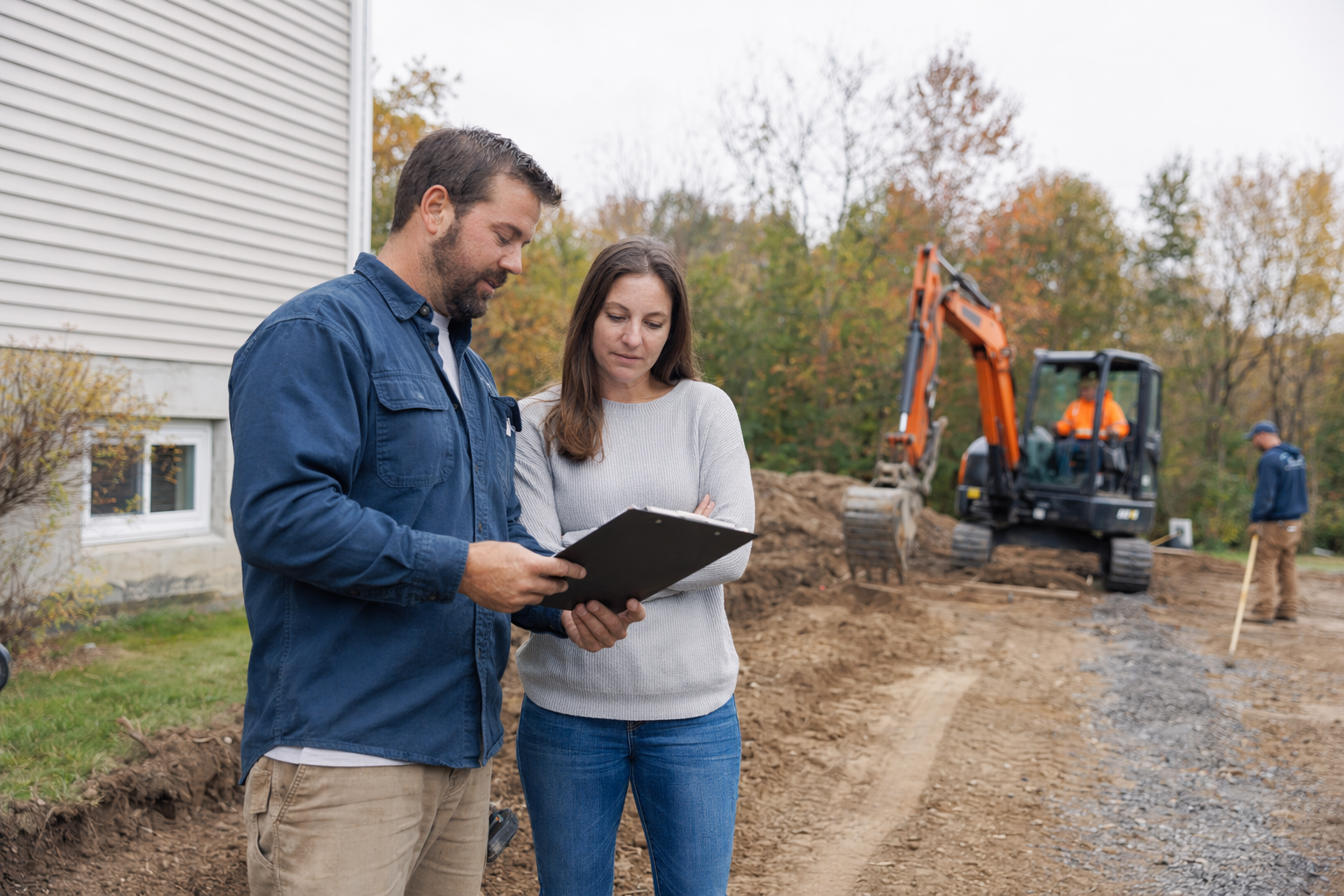
A good excavation quote is specific, itemized, and clear about what is included, excluded, and priced only if needed.
The short answer
When you read a grading or excavation quote, look for scope, quantities, unit prices, and clear exclusions. A real estimate should describe the work in plain English, such as cut and fill, rough grade, finish grade, building pad prep, trenching, culvert install, drainage swales, French drain work, topsoil placement, compaction, and haul-off.
You also want to see how the contractor plans to measure the job. Site work often changes based on cubic yards moved, rock found underground, water in the excavation, footing depth, access for equipment, or whether spoils can stay on site. If a bid is only one total number with no breakdown, ask questions before comparing it to other bids.
The best quotes are not always the lowest. A lower number can simply mean important work was left out, like erosion control, silt fence, final cleanup, imported fill, or compaction testing. A higher number may include more complete work and fewer surprise charges later.
Gradeline is a free service that helps property owners understand site-work projects and get matched with licensed, insured, bonded local contractors. We do not perform excavation work or give engineering advice. Before any digging starts, always call 811 to mark underground utilities.
What to look for
Start with the scope of work. The quote should say what area is being worked on, what the target result is, and what equipment is expected, such as a mini-excavator, skid steer, dozer, or dump trucks. It should also state whether the work is for rough grade only or includes finish grade, because that difference matters. Rough grade shapes the site. Finish grade is the final, more precise surface that prepares for sod, seed, concrete, or landscaping.
Look for quantities and units. Good estimates often include cubic yards of cut, fill, import, or haul-off; linear feet of trench or drain pipe; square feet of clearing or grading; and the depth or thickness of materials. Unit pricing helps you understand change orders later. For example, "haul off excess soil at $X per cubic yard" is much easier to evaluate than a vague note saying "extra dirt removal if needed."
Check whether the quote addresses these common line items:
- Mobilization and equipment delivery
- Clearing, grubbing, and stripping topsoil
- Excavation, cut and fill balance, and building pad prep
- Imported fill versus reuse of on-site soil
- Compaction method and whether lifts are specified
- Rock excavation or hard digging conditions
- Haul-off, dump fees, and trucking
- Drainage items like swales, French drains, culverts, or daylighting pipe
- Erosion control such as silt fence or inlet protection
- Final grading, cleanup, and seeding or topsoil if included
Pay attention to assumptions and exclusions. Many site-work quotes assume normal soil conditions, dry weather, reasonable access, and no hidden debris underground. They may exclude permits, surveying, engineering, utility relocation, tree removal, retaining walls, shoring, dewatering, compaction testing, and restoration outside the work area. Exclusions are not automatically bad, but they should be stated clearly.
Finally, compare timelines and payment terms. The quote should say how long the work is expected to take, whether weather can delay it, and when payment is due. It should not ask for personal financial or sensitive identity information. If you want help reviewing quotes and connecting with local pros, Gradeline can help through our free get matched service.
Common mistakes
One common mistake is comparing totals instead of comparing scope. Two bids can both say "grading" but mean very different things. One may include excavation, fill import, compaction, drainage correction, and finish grading with a positive slope away from the foundation. The other may only include a quick pass with a skid steer. The totals are not truly comparable unless the work is the same.
Another mistake is missing the dirt math. Soil expands when excavated and may not compact well enough for reuse. Topsoil is not the same as structural fill, and wet or organic soil may need to be removed. If a quote does not explain what soil stays, what gets hauled off, and what gets imported back in, the final cost can move a lot.
Property owners also get surprised by conditional charges. Rock excavation, buried concrete, stumps, trash, groundwater, unstable slopes, deep footing excavation, and tight access can all increase labor, trucking, and machine time. These are normal risks in site work. A careful contractor will list them as possible extras instead of hiding them.
It is also easy to overlook drainage and erosion details. If a quote does not mention swales, culverts, French drains, positive grading away from the house, or temporary erosion control like silt fence, you may not be getting a complete site solution. That can lead to ponding, muddy runoff, or callbacks later.
Last, do not assume every contractor is equally qualified for every kind of site work. Ask whether they are licensed where required, insured, and bonded, and verify credentials yourself. For more help on screening companies, see how to choose an excavation contractor.
Next steps
The fairest way to compare bids is to give each contractor the same project information. Share the same photos, sketch, dimensions, access notes, drainage concerns, and target outcome. If possible, ask each one to break out major items separately, such as excavation, haul-off, imported fill, drainage work, and final grading. That makes hidden gaps easier to spot.
Ask a few direct questions before you sign:
1. Is this rough grade or finish grade?
2. How many cubic yards are assumed for cut, fill, import, and haul-off?
3. What happens if rock, wet soil, or buried debris is found?
4. Is compaction included, and how will it be done?
5. Are drainage and erosion control included?
6. What is excluded from this number?
If the project affects a foundation, retaining wall, steep slope, or structural element, ask whether engineered plans or additional approvals are needed. Gradeline does not provide engineering or legal advice, but we can help you understand common scope items and connect you with local contractors for work like land grading and other site-work services. You can also review typical price ranges on our costs page.
When you are ready, use Gradeline to get matched with vetted local contractors. We are a free education and matching service for property owners. Always verify licensing, insurance, and bond status yourself, and always call 811 before any digging begins.