We help you learn what the job involves and connect with licensed local contractors, at no cost to you.
What is Gradeline?
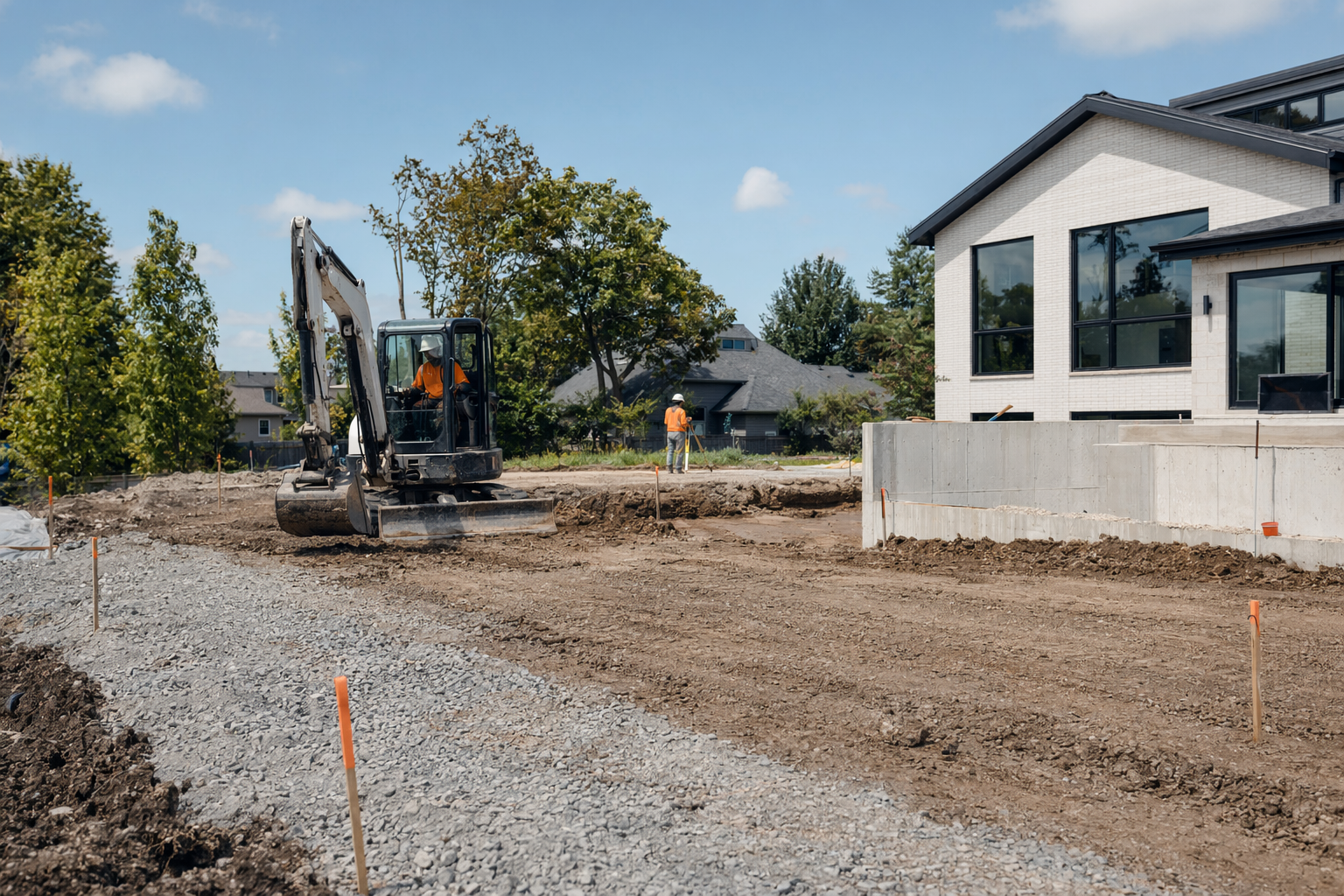
Gradeline is a free education and matching service for property owners who need excavation or land-grading help. We explain common site-work projects in plain English, including things like cut and fill, rough grade vs. finish grade, drainage, building pad prep, driveway grading, trenching, haul-off, and erosion control.
We are not an excavation contractor, general contractor, engineer, or law firm. We do not dig, grade, compact soil, install culverts, set footing depth, design retaining systems, or supervise job sites. Our role is to help you understand the work and connect with local contractors who may be able to handle it.
If you are comparing options, you can explore services, read practical guides, review typical costs, or get matched with a local contractor.
Who we help
We help homeowners, landlords, small commercial property owners, and people buying or improving land. Some visitors are planning a new home site and need clearing, cut and fill, a building pad, or driveway access. Others are dealing with drainage problems, standing water, negative slope near the foundation, washout, or muddy areas that may need regrading, a swale, a French drain, or better runoff control.
We also help people who are new to the U.S. or simply new to excavation work. Site work can feel confusing because contractors may use technical terms like compaction, topsoil vs. fill, cubic yards, silt fence, shoring, trench spoil, or finish grade. We try to make those topics easier to understand before you start calling companies.
Our service is for people who want a clearer starting point, not a do-it-yourself substitute for licensed field work. For any digging project, always call 811 before excavation so underground utilities can be marked.
How Gradeline works
First, we help you describe your project in simple terms. That might include the type of work, the property location, what problem you are trying to solve, and any details that matter, such as slope, access for a mini-excavator or skid steer, visible drainage issues, or whether you may need haul-off, fill delivery, or compaction.
Next, if we have coverage in your area, we try to match you with local excavation or grading contractors. We look for companies that represent that they are properly licensed where required and carry insurance, and we encourage property owners to verify credentials themselves before hiring anyone.
Then you can speak directly with the contractor about scope, timing, site conditions, and pricing. They may inspect the property, measure quantities such as cubic yards of cut or fill, discuss rough grading versus finish grading, and explain whether erosion control, a culvert, a drain, or imported fill may be part of the job. We do not quote the work, set prices, or tell contractors what to charge.
How we make money
Gradeline is free for property owners. You do not pay us to read our educational content, ask for a match, or be connected with a contractor.
We make money when some excavation or grading contractors pay us a flat fee to receive a matched project opportunity. That fee is paid by the contractor, not by the property owner.
That contractor fee does not change what you pay for the work. Your project price is determined by the contractor based on your site conditions, local market rates, equipment, labor, material, trucking, disposal, permits, and the actual scope of work. We think it is important to say this clearly so you understand how our service works.
What we are not
Gradeline is not a contractor and does not perform excavation, grading, drainage, demolition, or construction services. We do not provide engineering, surveying, geotechnical, structural, legal, or permit advice. We do not tell anyone how deep a footing should be, whether shoring is required, what compaction standard to use, or how to design a drainage system for a specific property.
Our articles and cost ranges are general educational information only. Site work depends heavily on soil type, weather, slope, groundwater, access, setbacks, local code, and utility conflicts. A clay lot with poor drainage and limited machine access is very different from a flat sandy lot with easy truck access.
Because of that, you should always have the actual site reviewed by qualified local professionals. Before hiring, verify licenses where applicable, insurance, bonding, and experience with projects similar to yours. Before any digging starts, call 811 to have utilities marked.