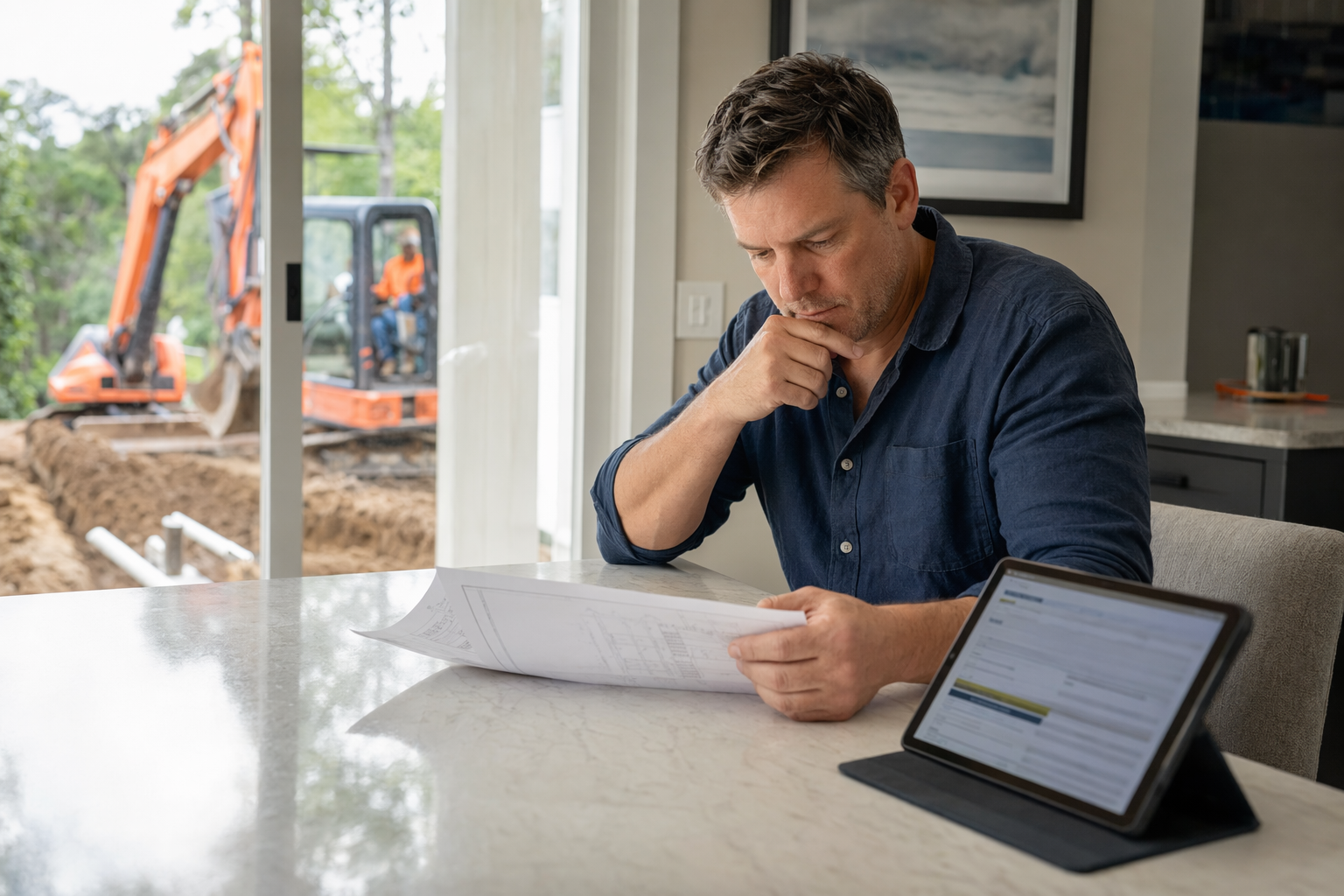
Pick a contractor who is properly licensed, insured, bonded, experienced with your kind of site work, and willing to put the full scope in writing.
The short answer
A good excavation contractor should be licensed where required, carry active insurance, be bonded when appropriate, and have real experience with the type of work you need. That could mean cut and fill for a building pad, rough and finish grading, trenching for utilities, drainage work like a swale or French drain, driveway prep, culvert installation, or haul-off of excess soil.
Ask each contractor to explain the plan in plain English. You want to hear how they will protect utilities, manage drainage, handle topsoil versus fill, compact soil in lifts, and leave positive slope away from the foundation. If the job involves deeper excavation, retaining work, or unstable soils, ask whether shoring, engineering, or permits may be required. Gradeline is a free education and matching service, not a contractor, so we help property owners understand the process and connect with vetted local pros through [/get-matched/] when they are ready.
Before anyone digs, call 811 to have underground utilities marked. Then compare at least two or three written proposals. Do not choose on price alone. The lowest number can leave out compaction, erosion control, haul-off, finish grade, or cleanup.
What to look for
Start with credentials and fit for the project. Verify the contractor's license if your state or local area requires one. Ask for proof of general liability insurance, workers' compensation if they have crews, and bond information if bonding applies. Then confirm they regularly do your kind of work. A contractor who mainly clears brush may not be the best fit for a house pad, footing excavation, or detailed drainage corrections.
Look for a clear scope of work, not vague promises. A strong proposal should describe things like:
- what is being excavated or graded
- estimated quantities, often in cubic yards
- whether topsoil will be stripped, stockpiled, respread, or removed
- what fill material will be used and how it will be compacted
- whether rough grade and finish grade are both included
- drainage items such as swales, culverts, trench drains, or a French drain
- erosion control such as silt fence or stabilized entrance
- haul-off, disposal, and site cleanup
- what equipment is expected, such as a mini-excavator, skid steer, dozer, or dump trucks
Ask practical jobsite questions. Will they handle utility locating coordination after you call 811? Who gets permits if needed? How will they protect the driveway, sidewalk, septic area, trees, neighboring property, and existing structures? If weather changes the soil conditions, how will they communicate schedule or scope changes?
Finally, pay attention to communication. A reliable contractor should be willing to answer questions, explain soil and drainage issues without hiding behind jargon, and put changes in writing. If you want help comparing contractors and scopes, Gradeline can help you understand common site-work services at [/services/] and connect you with local companies at [/get-matched/].
Common mistakes
The biggest mistake is hiring based only on the lowest price. Excavation bids can look similar while covering very different work. One bid may include stripping topsoil, import fill, compaction, and finish grade, while another only includes basic digging. If you compare only the total price, you may not notice what is missing until the site is incomplete or extra charges appear.
Another common mistake is not asking about drainage and soil handling. Good grading is not just making the land look flat. It often means shaping the lot so water moves away from the foundation, driveway, and crawl space. Ask how they will create positive slope away from the house, where runoff will go, whether a swale or French drain is needed, and what happens to wet or unsuitable soil. Also ask whether fill will be placed and compacted in layers instead of dumped loosely.
Property owners also get into trouble when there is no detailed written agreement. Handshake deals and one-line estimates create confusion about footing depth, trench widths, import material, rock excavation, haul-off, restoration, and cleanup. If there is a change, such as unexpected buried debris or groundwater, the contractor should document it before extra work starts.
Red flags include a contractor who avoids showing license or insurance documents, pressures you to decide immediately, asks you to skip permits, refuses to describe the grading plan, or seems casual about utility safety. Another red flag is a promise that everything can be priced perfectly before they understand the site. Soil, access, water, and buried conditions can affect the work. Honest contractors explain what they know, what they need to verify, and what could change. For more background on planning and pricing, see [/costs/] and [/guides/how-to-choose-an-excavation-contractor/].
Next steps
First, write down the basics of your project. Include the address, a short description of the work, photos, rough measurements, and your goal. For example: grade around the home for drainage, cut and fill a building pad, dig footings, install a culvert at the driveway entrance, remove 20 cubic yards of soil, or regrade the backyard after a retaining wall project. If you know there are access limits for a dump truck, mini-excavator, or skid steer, mention that too.
Next, contact two or three qualified contractors and ask the same core questions:
1. Are you licensed, insured, and bonded if required?
2. Have you done similar work recently?
3. What exactly is included in the scope?
4. How will drainage, compaction, and cleanup be handled?
5. Are permits, erosion control, and haul-off included?
6. What could change the price or timeline?
Then review the written contract carefully. It should identify the site, describe the work, list what is included and excluded, explain the payment schedule, note how change orders are handled, and state who is responsible for permits, utility coordination, and final grading or restoration. Keep copies of insurance certificates and any permit paperwork. And again, call 811 before digging so utilities can be marked.
If you want a simpler way to start, Gradeline is a free service that helps property owners understand excavation and grading work and get matched with vetted local contractors. You can request help at [/get-matched/] and explore common project types at [/services/land-grading/].