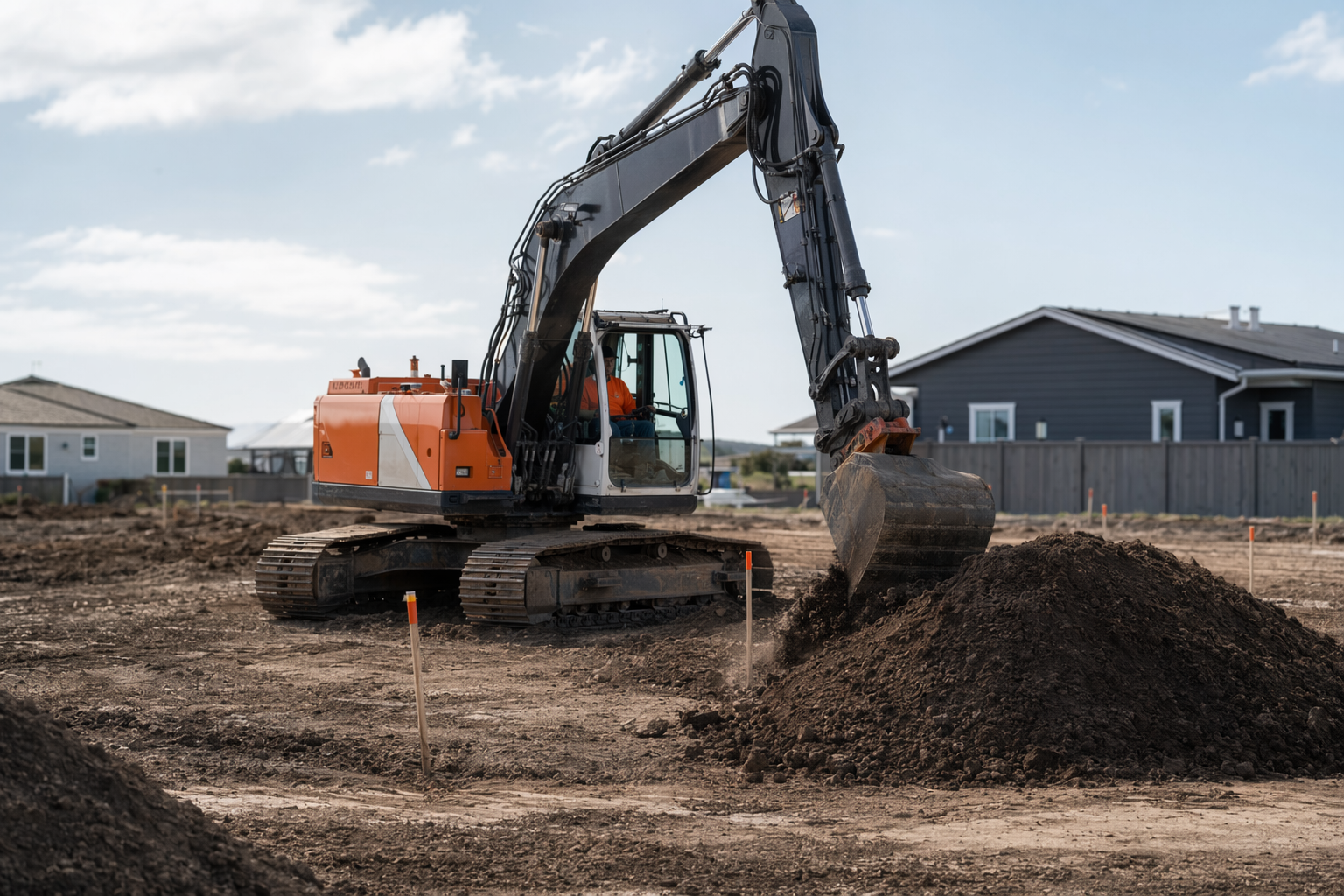
It means getting the lot clean, level, drained, and firm enough for construction equipment, foundations, and utilities.
What this work involves
Site preparation usually starts before foundation work, paving, or major utility installation. The goal is to turn an uneven, overgrown, soft, or obstructed lot into a workable building area with safe access, proper drainage, and compacted soil. Depending on the property, that can include brush and tree clearing, removing stumps, stripping topsoil, hauling off debris, and bringing in fill where low spots need to be built up.
A contractor may use a mini-excavator, skid steer, dozer, roller, or dump trucks to perform cut and fill work. "Cut" means removing high ground. "Fill" means adding suitable material to raise low areas or build a building pad. Topsoil is usually stripped and stockpiled because it is organic and not usually the right material under slabs, footings, or driveways. Structural areas often need compactable fill instead.
Rough grading shapes the site to the general elevations needed for the house, driveway, drainage paths, and work areas. Finish grading comes later and is more precise. A good site prep plan also considers positive slope away from the foundation, swales or a French drain where water needs to be redirected, culverts at driveway crossings, and erosion control such as silt fence to help manage runoff and sediment.
On some jobs, site prep also includes creating construction access, excavating for a building pad, moisture conditioning soil, and compacting in lifts so the ground is firm enough for the next stage. If digging is involved, always call 811 before work starts so underground utilities can be marked.
Signs you need it
You likely need site preparation if you are planning new construction, an addition, a detached garage, a shop, a driveway, or any project where equipment and materials need a stable, accessible work area. It is also common when a lot has brush, old roots, buried debris, uneven terrain, poor drainage, or soft ground that could cause settling later.
Common signs include standing water after rain, visible low spots, a lot that slopes toward the future building area, ruts from vehicle tires, exposed roots, or a surface covered in organics that will not support a slab or footing well. If the property needs a level building pad, cleaner access for trucks, or better water flow away from the planned structure, site prep is usually part of the job.
You may also need this work if your permit set or builder calls for rough grading, compaction, or pad preparation before foundation crews arrive. On sloped lots, a contractor may need to cut into the hillside, build up lower sections with compacted fill, and control runoff so the site stays workable and safer during construction.
If you are not sure whether you need full site prep or just land grading, a local contractor can walk the property and explain what is needed for access, drainage, and subgrade stability.
What it typically costs
Site preparation costs vary a lot because every lot is different. Size, slope, vegetation, soil type, access, haul-off distance, import fill, compaction requirements, and drainage work all affect the price. In many residential projects, light site prep can start around $2,000 to $6,000, while more typical jobs with clearing, stripping topsoil, rough grading, and compaction often fall around $5,000 to $20,000. Larger, steeper, heavily wooded, or poor-access sites can run much higher.
A few common cost drivers are:
- Clearing brush, trees, stumps, and buried debris
- Stripping and stockpiling topsoil
- Cut and fill volume, often measured in cubic yards
- Importing fill or hauling material off site
- Compaction testing or strict pad requirements
- Culverts, swales, French drains, or erosion control
- Tight access that requires smaller equipment or more labor
Some contractors price by the project, while others may break out parts of the work by cubic yard, hour, or truckload. For example, haul-off and imported fill can change the total quickly if the site is badly out of balance. A project that only needs brush clearing and rough shaping will usually cost less than one that needs a raised building pad, drainage corrections, and repeated compaction in lifts.
Gradeline does not provide quotes or perform the work. We share typical ranges and help you get matched with contractors so you can compare scope, equipment, timeline, and pricing. You can also read more about typical excavation and grading pricing at /costs/.
How to choose the right contractor
Look for a contractor who regularly handles residential site work, not just general landscaping. Site preparation affects drainage, foundation readiness, and access for every trade that comes after, so experience matters. Ask whether they do cut and fill, rough grading, building pad prep, compaction, haul-off, and erosion control on projects like yours.
Before hiring anyone, verify that they are properly licensed where required, insured, and bonded if applicable. Ask for a clear written scope that explains what will be cleared, whether topsoil will be stripped and stockpiled, what fill will be used, how compaction will be handled, and whether haul-off, culverts, silt fence, or drainage features are included. It is smart to ask who is responsible for utility locate coordination too. Even with a contractor, make sure 811 is called before digging starts.
Good questions to ask include:
1. How will you handle topsoil versus fill?
2. Will the building pad be compacted in lifts?
3. How will water drain away from the future foundation?
4. What equipment will you use on this site?
5. What is included in haul-off and cleanup?
6. Have you worked on lots with similar slope, access, or soil conditions?
If you want help comparing your options, Gradeline can help you understand the scope and connect you with vetted local contractors. You can also review tips at /guides/how-to-choose-an-excavation-contractor/ and explore related services.
Get matched, free
Gradeline is a free service for property owners who want to understand excavation and grading work and find qualified local contractors. We do not perform site preparation, and we do not give engineering, structural, or legal advice. What we do is help you describe your project in plain English and get matched with local contractors who handle work like clearing, rough grading, compaction, drainage, and building pad prep.
When you reach out, it helps to share the property location, lot size, what you plan to build, whether the site is wooded or sloped, whether water collects on the lot, and any timing goals. You do not need to provide financial, ID, or immigration information. Just the project details and contact information needed to help with matching.
If you are ready to take the next step, visit /get-matched/. We will help you connect with licensed, insured, bonded contractors in your area, and you can verify credentials yourself before hiring.