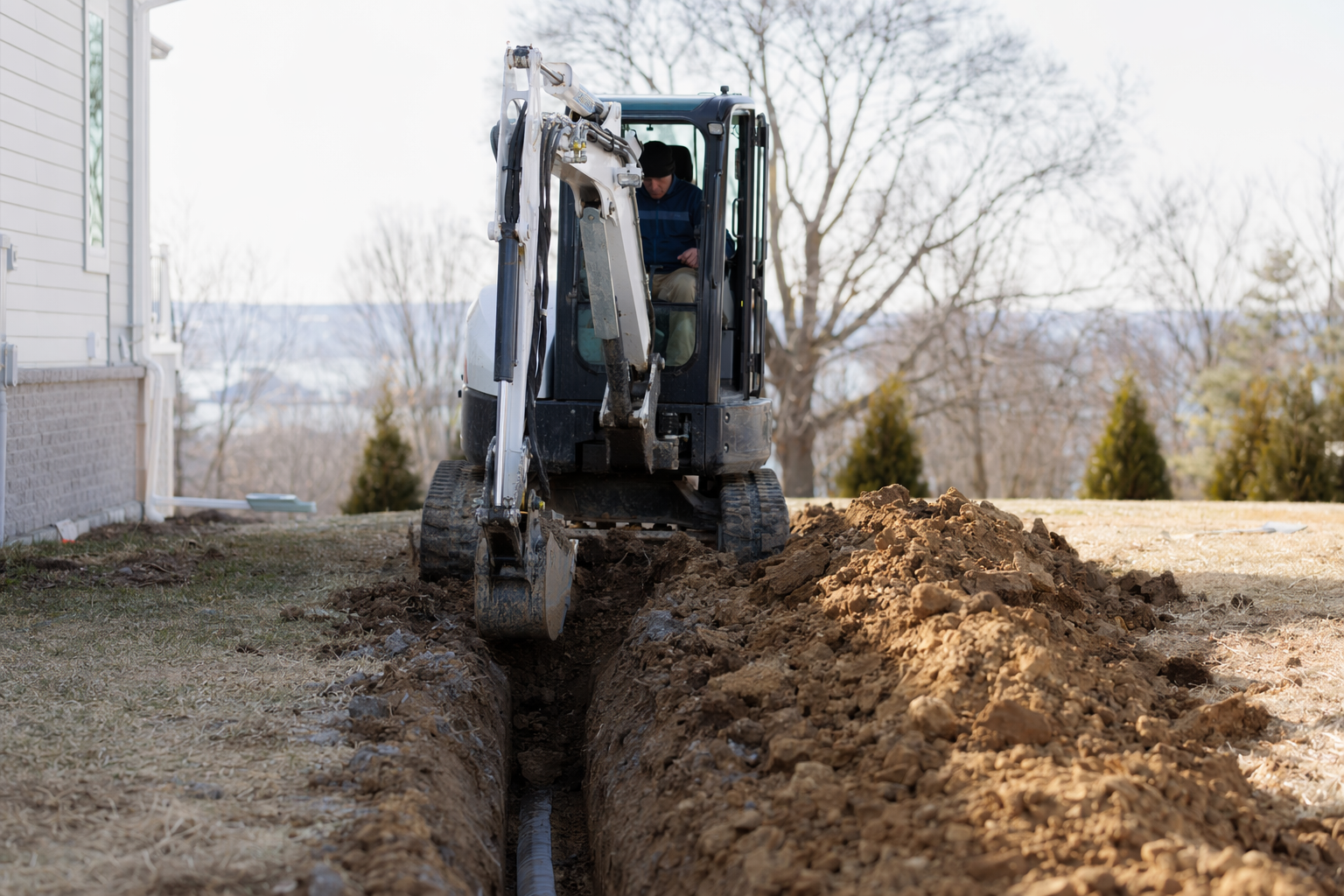
If water is pooling or you need lines run underground, the right drainage or trenching work can protect your property and make the site work correctly.
What this work involves
Drainage and trenching covers several kinds of site work. Common examples include French drains to collect and redirect groundwater, swales shaped into the soil to guide surface runoff, culverts under driveways or access roads, and trenches for water, sewer, electric, gas, irrigation, or drainage pipe. On some projects, the contractor may also regrade the area so there is positive slope away from the foundation.
A typical drainage job starts with figuring out where the water comes from, where it should go, and whether the fix needs surface grading, buried pipe, or both. The crew may use a mini-excavator or skid steer to cut trenches, install stone and pipe, add filter fabric, backfill in lifts, and compact the soil so the trench does not settle later. In wet or sloped areas, erosion control like silt fence may also be needed.
Utility trenching is different from general digging because depth, spacing, bedding, and backfill matter. Some lines need specific trench widths, warning tape, sand or gravel bedding, or inspections before covering. Trench safety matters too. Deeper trenches may require sloping, benching, or shoring depending on soil conditions and local rules.
Before any digging, always call 811 to have underground utilities marked. That is one of the most important first steps. For related site work, you can also explore services and land grading.
Signs you need it
The most common sign is standing water that stays in your yard for a day or more after rain. You may also see soggy spots, muddy areas that never seem to dry out, water flowing toward the house, or mulch and topsoil washing away. In colder climates, repeated icing in walkways or drive areas can also point to poor drainage.
Around the home, watch for water stains in the basement or crawl space, damp foundation walls, soil erosion near the footing area, or downspouts that dump water too close to the house. A good drainage plan often combines surface shaping with collection and discharge, not just one pipe in the ground.
You may also need trenching if you are adding a utility line to a garage, shed, accessory dwelling, barn, or new building pad. Common situations include running electric to an outbuilding, extending water service, replacing a damaged sewer lateral, adding irrigation, or installing a drain line around a retaining area. If the site has fill, roots, old concrete, or tight access, the work can be more involved.
What it typically costs
Costs vary with trench depth, length, soil type, rock, access, disposal, pipe type, and whether water must be carried a short distance or all the way to a legal outlet. As a very general range, simple drainage fixes can start around a few hundred dollars for minor swale touch-up or small downspout drainage improvements, while many French drain or yard drainage projects land roughly in the $2,000 to $8,000 range. Larger or more complex systems can run higher.
Utility trenching is often priced by linear foot, but the real cost depends on what is being installed and how deep it must go. Short, straightforward trenches for irrigation or simple drainage may be on the lower end. Longer runs, deeper utility trenches, difficult soils, haul-off, imported fill, compaction requirements, or restoration of lawn, gravel, concrete, or asphalt can push the total much higher.
Culverts and driveway drainage can also vary widely. A small culvert replacement with good access may be a modest project, while a larger culvert with headwalls, ditch reshaping, erosion control, or permit requirements can cost several thousand dollars or more.
These are typical ranges, not quotes or guarantees. A contractor usually needs to see the slope, outlet location, soil, and access to price the job correctly. You can learn more on our costs page.
How to choose the right contractor
Look for a contractor who regularly handles excavation, drainage, grading, and trenching work, not just general yard cleanup. Ask whether they have experience with French drains, swales, culverts, utility trenching, rough grade versus finish grade, compaction, and restoring the surface after backfill. On sloped or wet sites, ask how they handle erosion control and runoff during the job.
Always verify that the contractor is properly licensed if your state or local area requires it, and ask for proof of insurance and bond coverage where applicable. Gradeline recommends hiring licensed, insured, bonded contractors and verifying credentials yourself. If permits or inspections may be needed, ask who handles that and what is included.
Useful questions to ask include:
- What is causing the water problem, and where will the water discharge?
- Will the trench need bedding material, compaction in lifts, or haul-off?
- How deep and wide will the trench be?
- Will you protect existing landscaping, hardscape, and nearby structures?
- What equipment will you use, such as a mini-excavator or skid steer?
- How will you handle trench safety if the trench is deep?
Be careful with anyone who wants to dig first and figure it out later. A good contractor should be able to explain the basic plan in plain English. For more tips, see how to choose an excavation contractor. And no matter who you hire, call 811 before digging.
Get matched, free
Gradeline does not perform excavation, drainage, or trenching work. We are a free service that helps property owners understand the project and get matched with vetted local contractors for site work.
Tell us what is happening on your property, such as pooling water, a soggy side yard, a failing driveway culvert, or a trench needed for utilities. Share the rough location, timeline, photos if you have them, and the best way to reach you. We only ask for project and contact details needed to help with matching.
We can help you connect with contractors who handle drainage and trenching in your area, including French drains, swales, culverts, grading for runoff, and underground utility runs. To get started, visit get matched.