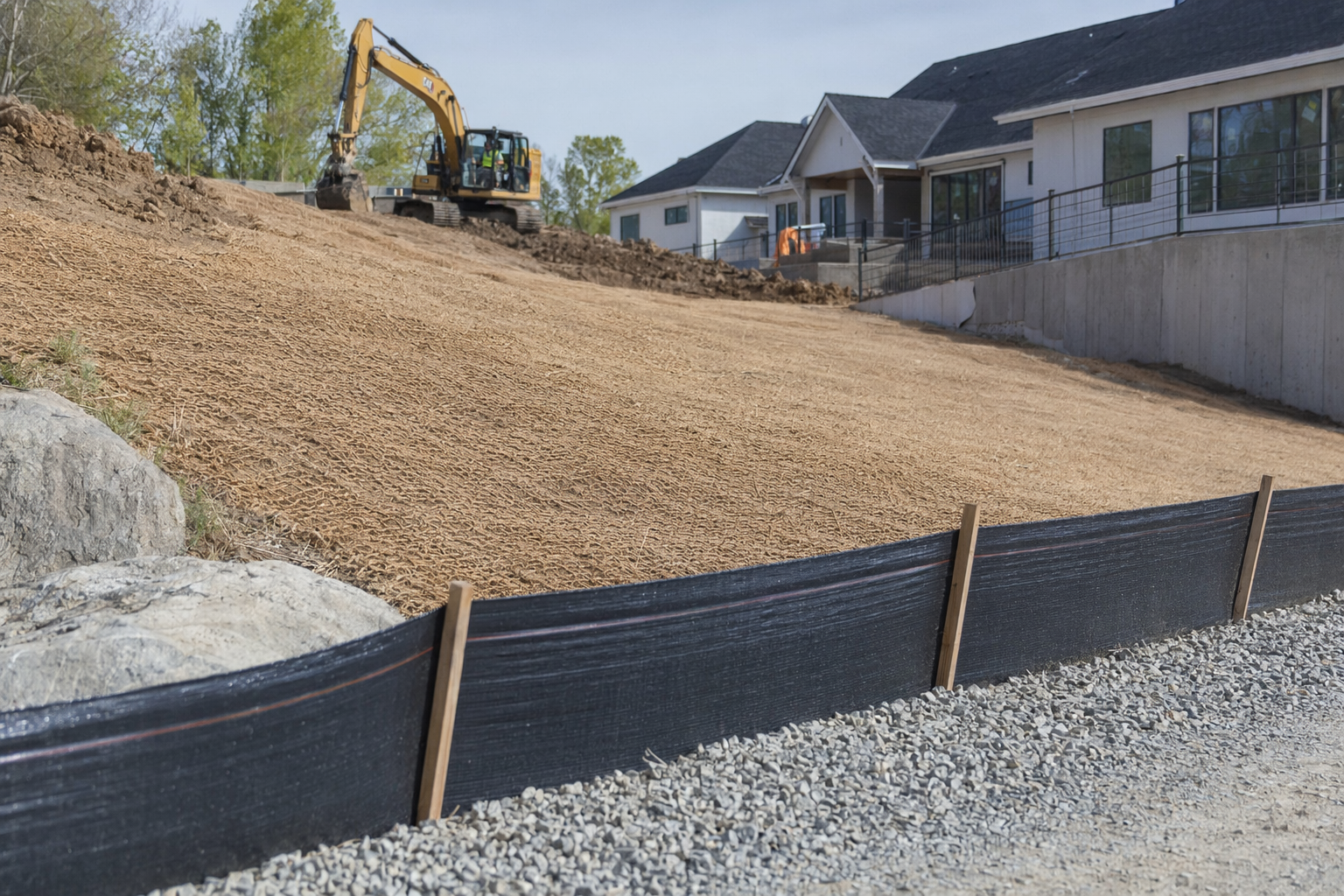
The ground under your project changes how hard it is to dig, how much support it needs, and how well it will hold up later.
The short answer
Not all dirt is the same. A contractor can often dig quickly in dry, stable soil, but the same trench or building pad can become slower, riskier, and more expensive if the site has wet clay, loose sand, buried rock, or unknown fill.
Here is the simple version:
- Clay holds water, gets sticky when wet, and can shrink or swell.
- Sand drains well, but trench walls can cave in more easily.
- Rock can require a breaker, hammer, or specialty equipment.
- Fill is man-made placed material, and if it was not compacted correctly, it may settle later.
Soil type matters for more than digging speed. It affects footing depth, whether shoring or trench support is needed, how much compaction is required, whether topsoil must be stripped off, and if extra drainage like a French drain or swale makes sense. It also changes how many cubic yards may need to be hauled off or brought in as engineered fill.
Gradeline is a free service that helps property owners learn the basics and get matched with vetted, licensed, insured, bonded local excavation and grading contractors. We do not perform site work or give engineering advice. Before any digging starts, always call 811 to have underground utilities marked.
What to look for
Start with what you can see on the site. Does water sit after rain? Does the ground crack in dry weather? Is the area soft, spongy, or full of roots? Are there signs the lot was filled in before, such as mixed debris, uneven settling, or a sharp change in soil color? These clues can tell you a lot before a mini-excavator or skid steer even arrives.
For common soil types, look for these patterns:
- Clay: smooth, sticky, heavy, and slow to drain. Can hold shape when squeezed.
- Sand: gritty, loose, easy to shovel, drains fast, but can collapse at the sides.
- Silt: fine and dusty when dry, slippery when wet, often erodes easily.
- Rock: hard digging, visible ledge, stones, boulders, or refusal when equipment hits solid material.
- Fill: mixed material that may include gravel, soil, brick, concrete fragments, or other buried debris.
Also look at what the project needs the soil to do. A trench for utilities, a footing excavation, a retaining wall cut, and a house pad all put different demands on the ground. For example, a building pad needs proper compaction and stable fill, while a trench may need sloped sides or shoring depending on depth and soil condition. A finish grade around a home should create positive slope away from the foundation so water moves away, not toward the structure.
If you are planning a larger project, ask the contractor what they expect for cut and fill, topsoil stripping, compaction method, and erosion control. On sloped lots, that may include silt fence, straw wattles, a swale, or a culvert. On wet lots, drainage improvements may be part of the grading plan. You can learn more about site work options at services and typical price ranges at costs.
Common mistakes
A common mistake is assuming all fill is good fill. Topsoil is great for growing grass and plants, but it is usually not the right material under a driveway, slab, or building pad because it contains organic matter and can settle. Structural areas usually need suitable fill placed in lifts and compacted correctly.
Another mistake is judging the site only when it is dry. Clay can seem firm one week and turn into a mess after rain. Sand may look easy to dig but may need more care to keep trench walls from sloughing in. Wet conditions can also increase haul-off, slow equipment, and make access harder for trucks.
Homeowners also get surprised by hidden conditions. Old buried concrete, stumps, roots, abandoned pipes, shallow groundwater, and large rocks can change the scope quickly. That is one reason contractors often give cost as a typical range, not a guaranteed number, until they see the site and understand the soil conditions.
The biggest safety mistake is starting to dig without utility locating or proper trench protection. Always call 811 before any digging. And if a trench or cut needs support, that is not a shortcut area. Licensed, insured, bonded contractors should know when sloping, benching, shoring, or other protective measures are needed, and when a project needs engineering input beyond basic excavation.
It is also a mistake to ignore drainage after the digging is done. Even well-compacted soil can become a problem if finish grading sends water toward the house. A rough grade shapes the site broadly, but the finish grade is what helps create proper drainage, stable topsoil placement, and a usable yard.
Next steps
If you are planning excavation or grading, take a few photos of the area and write down the basics: what you want built, the rough size, whether the area stays wet, whether there is a slope, and whether you know of any old fill or buried material. This helps a contractor understand the likely soil challenges before a site visit.
Then speak with a qualified local contractor about what the ground conditions may mean for the work. Good questions include:
1. Do you expect clay, sand, rock, or fill to affect digging or compaction?
2. Will this project need import fill, haul-off, drainage work, or erosion control?
3. How will you handle rough grade versus finish grade?
4. What equipment do you expect to use, such as a mini-excavator, full-size excavator, or skid steer?
5. Are you licensed, insured, and bonded, and can I verify that directly?
Gradeline can help you get matched with vetted local excavation and grading contractors for projects like trenching, building pad prep, drainage improvements, and land grading. We are a free education and matching service, not a contractor. If you want help finding the right pro, start here: get matched.
If you are still comparing project types or trying to understand scope, visit services or read how to choose an excavation contractor. No matter what kind of soil you have, always call 811 before digging and verify contractor credentials yourself.