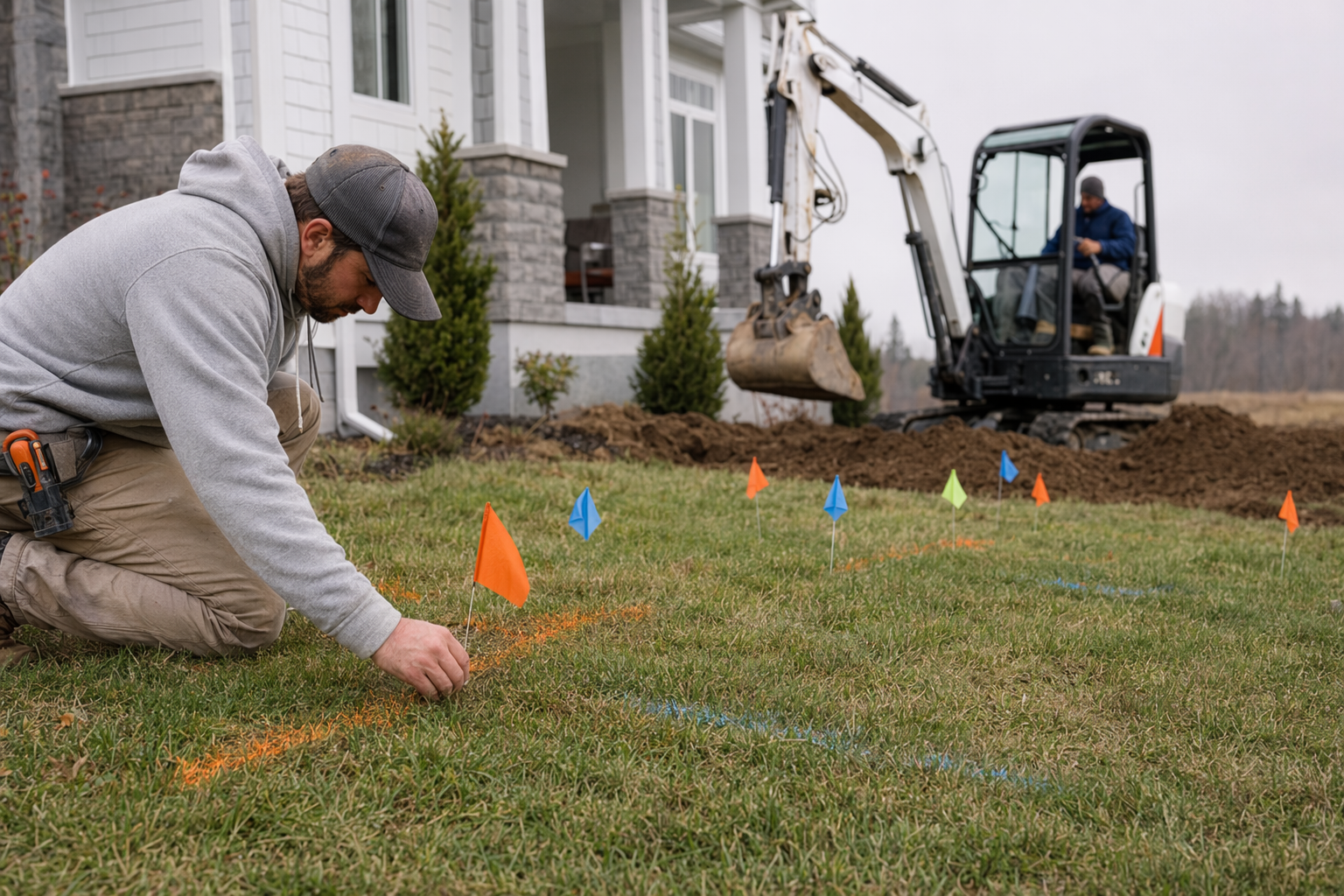
Do not dig until you know what permits you need, where your boundaries are, what the soil is like, and where underground utilities run.
The short answer
Many excavation and grading jobs need a permit, especially if you are changing drainage, building a pad, digging near a foundation, installing a retaining wall, adding a driveway culvert, or moving a large amount of soil. Permit rules are local, so the exact trigger depends on your city or county, not just the size of the machine on site.
A survey helps confirm property lines, easements, setbacks, and elevation details before cut and fill work begins. A soil test can show whether the ground is suitable for compaction, a building pad, septic work, or footing support. These are not just formalities. They help avoid grading the wrong area, placing fill where it should not go, or creating drainage problems for you or your neighbors.
You should also call 811 before any digging starts, even for small jobs. Utility marks can identify public underground lines such as gas, electric, water, sewer, and communications. Private lines may not be included, so ask your contractor what still needs to be located.
Gradeline is a free education and contractor-matching service. We can help you understand the process and get matched with vetted local excavation and grading contractors, but the contractor and local building office should confirm permit requirements, site conditions, and scope details. You should also verify that any contractor you hire is licensed, insured, and bonded yourself.
What to look for
Start by asking whether your project changes drainage, slope, or finished elevation. If the job affects runoff, adds fill, cuts into a hillside, installs a French drain or swale, or changes the grade around the house, a permit may be required. Positive slope away from the foundation is often important, but the exact grading plan should follow local rules and site conditions.
Look for situations where a survey matters most:
- New building pad or home site prep
- Fence, retaining wall, driveway, or culvert near a property line
- Work near setbacks or easements
- Drainage disputes or unclear lot corners
- Sloped lots where finish grade elevation matters
A soil test is often worth asking about if the project includes a house pad, garage slab area, septic area, deep excavation, or imported fill. Soil conditions affect compaction, drainage, and stability. Expansive clay, wet soils, loose fill, and poor bearing conditions can change the equipment, material, and haul-off plan.
For 811, call a few business days before digging and wait for utilities to be marked. White paint or flags can be used to mark the planned dig area before the utility crews arrive. Keep in mind that 811 usually marks public utilities only. Irrigation lines, private electric runs to sheds, propane lines, or other owner-installed lines may need separate locating.
If you are comparing contractors, ask how they handle permit coordination, survey review, erosion control, and utility safety. A strong site-work contractor should be able to explain rough grade versus finish grade, compaction steps, topsoil versus structural fill, silt fence needs, and whether a mini-excavator, skid steer, or larger equipment is appropriate. For help understanding scope before you hire, see our guides or get matched.
Common mistakes
One common mistake is assuming a small project does not need a permit. A short trench, driveway expansion, small retaining wall, or regrading job can still trigger local review if it affects drainage, right-of-way access, erosion control, or utility setbacks. Another mistake is starting rough grade before the permit, survey, or approved plan is in place.
Property-line errors are expensive. Homeowners sometimes clear, cut, fill, or place spoil piles outside their lot without realizing it. That can create disputes with neighbors, HOA issues, or orders to remove work that was already completed. A current survey can help avoid grading over a line, into an easement, or too close to a utility corridor.
Skipping the soil question also causes problems. Fill that is not placed and compacted properly can settle later. Topsoil is useful near the surface for planting, but it is not the same as suitable compacted fill for a building pad or structural area. Wet soil, organics, or poor compaction can lead to rutting, soft spots, and drainage failures.
The biggest safety mistake is digging without calling 811 first. Hitting a gas, electric, water, sewer, or communications line can be dangerous and costly. Also remember that marked utilities do not automatically mean you can dig freely right next to them. Contractors may need hand digging, careful exposure, shoring, trench protection, or changes in depth and equipment near marked lines.
Another mistake is treating 811 marks as permanent. Marks can fade, get disturbed by rain, mowing, or traffic, and may need refreshing if the project is delayed. Always confirm markings are current before digging resumes.
Next steps
First, define the project clearly. Write down what you want done, such as land grading, drainage correction, a building pad, culvert installation, trenching, or haul-off. Include rough dimensions if you know them, such as linear feet, depth, slope problem areas, or estimated cubic yards of soil to move.
Next, contact your local building or public works office and ask what is required for your address. Ask whether you need a grading permit, drainage review, right-of-way permit, erosion control measures like silt fence, a survey, or soil testing. If your project supports a future structure, ask what documentation the building department expects before excavation begins.
Then call 811 before any digging, even if the contractor will also call. Mark the proposed work area in white if requested in your area, and wait until all utilities respond. If you know there are private lines on the property, tell the contractor so those can be discussed separately.
Finally, get proposals from qualified local contractors and compare scope, not just price. Ask what is included for excavation, cut and fill balance, compaction, finish grade, drainage improvements, spoil haul-off, and cleanup. Typical costs vary a lot by access, slope, soil, depth, and export needs, so use our cost guides for planning ranges, not guarantees. When you are ready, Gradeline can help you get matched with vetted local contractors. Always verify licenses, insurance, and bond status yourself before hiring.