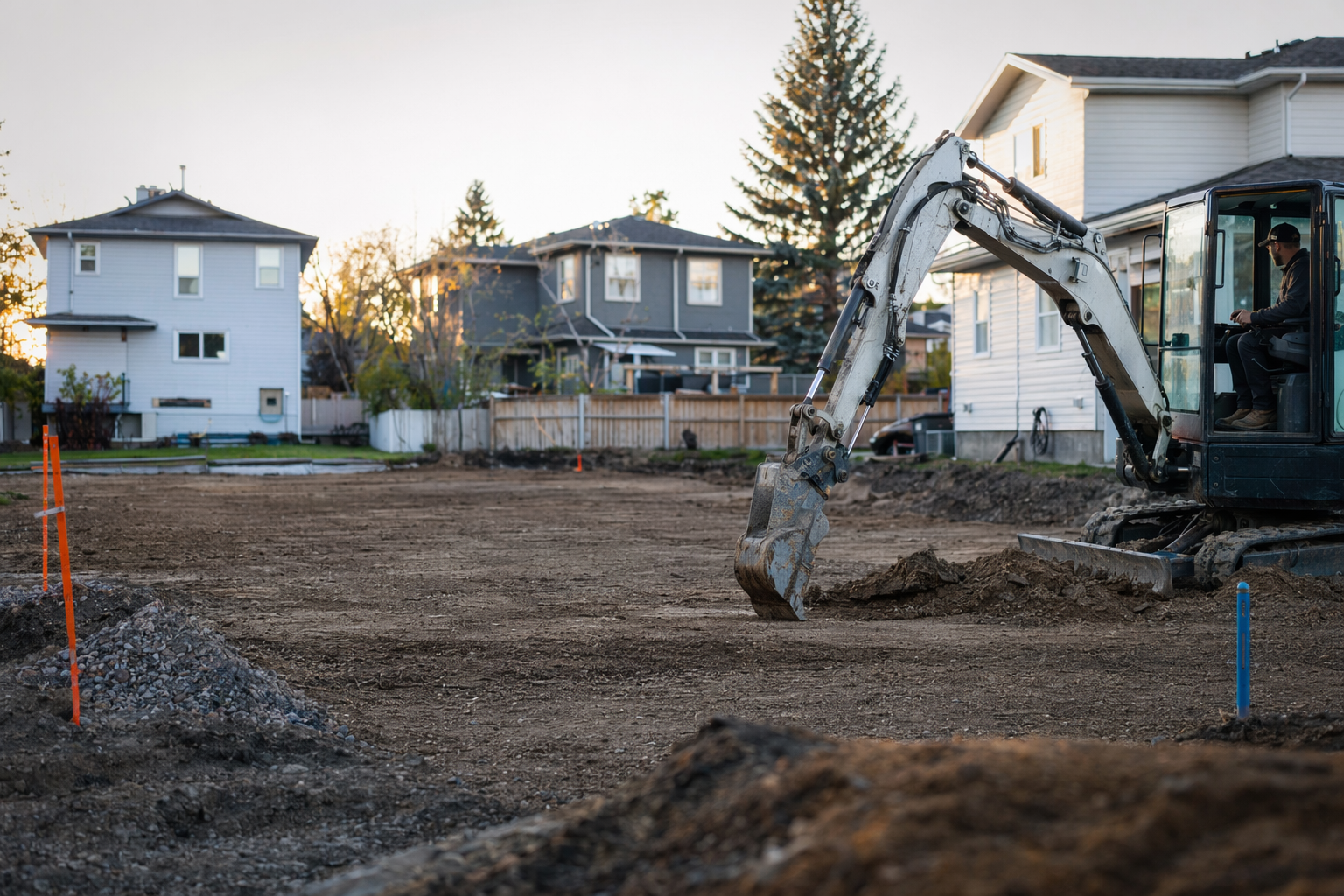
We help Phoenix property owners find local licensed, insured, bonded excavation and grading contractors for jobs like drainage, dirt work, building pads, trenching, and site prep.
Excavation and grading in Phoenix
Phoenix excavation and grading work often starts with heat, hard desert soil, drainage planning, and access. Even simple dirt work can involve cut and fill, rough grade, finish grade, compaction, haul-off, and making sure water moves away from the home with a positive slope away from the foundation. On some lots, contractors may also shape a swale, install a culvert, add erosion control, or prepare for a French drain.
Common projects in Phoenix include building pad prep, trenching for utilities, footing excavation, pool excavation, driveway and RV pad prep, yard regrading, lot clearing, and removing or importing fill. Contractors may use a mini-excavator for tight access, a skid steer for grading and cleanup, or larger equipment for bulk excavation measured in cubic yards. Good site work is not just moving dirt. It also means checking soil conditions, managing haul-off, and compacting fill in lifts when needed.
If your project is near a structure, wall, sidewalk, or property line, the contractor may need to think about slope stability, safe digging, and whether shoring is needed. Footing depth, drainage path, and final elevation can affect the whole job. Gradeline does not provide engineering, structural, or legal advice, but we can help you connect with contractors who handle services like land grading and general excavation.
Before any digging in Phoenix, always call 811 to have underground utilities marked. That includes electric, gas, water, sewer, and communications lines. Utility marking is a basic safety step for every trench, footing, drain line, or grading project.
What it typically costs
Excavation and grading costs in Phoenix depend on the size of the area, soil conditions, access for equipment, depth of excavation, haul-off needs, imported material, and compaction requirements. A small regrading or trenching job may cost much less than a full building pad, drainage correction, or large cut-and-fill project. Prices also change if the crew needs to remove concrete, work around walls, protect existing landscaping, or bring in engineered fill or topsoil.
Typical Phoenix ranges homeowners may see:
- Small grading or minor re-sloping: about $1,500 to $5,000
- Yard drainage correction, swale work, or basic French drain excavation: about $2,500 to $8,000+
- Building pad or shed pad prep with grading and compaction: about $3,000 to $12,000+
- Pool excavation or larger bulk dirt removal: often $4,000 to $15,000+
- Utility trenching: often priced by linear foot or by access and depth, with many small residential jobs starting around $1,500+
- Haul-off, imported fill, topsoil, gravel, and compaction can add significantly to the total
Ask contractors what is included. A lower number may only cover machine time, while another quote may include layout, grading, compaction, spoil removal, finish cleanup, and erosion control such as a silt fence. It is also worth asking whether the price assumes rough grade only or rough plus finish grade. Those are not the same thing, and the difference matters if you want a smooth final surface ready for concrete, landscaping, or a building pad.
Gradeline does not give quotes or guarantees. We share honest typical ranges and help you compare local contractors. You can learn more on our costs page and read how to choose an excavation contractor.
Get matched, free
Gradeline is a free matching and education service for property owners in Phoenix. Tell us about your project, such as lot grading, drainage, trenching, building pad prep, cut and fill, or haul-off. We use that information to help match you with local excavation and grading contractors who serve your area.
You compare quotes, ask questions, and choose who to hire. We recommend hiring contractors who are licensed, insured, and bonded when required, and verifying credentials yourself. You can ask about experience with desert soil, compaction, finish grade, drainage, erosion control, and whether they will handle permits if your project needs them.
To get started, it helps to share a few basics:
1. Property type and ZIP code
2. What you need dug, graded, removed, or filled
3. Approximate size, depth, or cubic yards if known
4. Access limits for equipment like a mini-excavator or skid steer
5. Your timeline and best contact information
Please do not send financial details, ID numbers, or immigration information. We only need project and contact details so we can help with a match. Start here: Get matched.