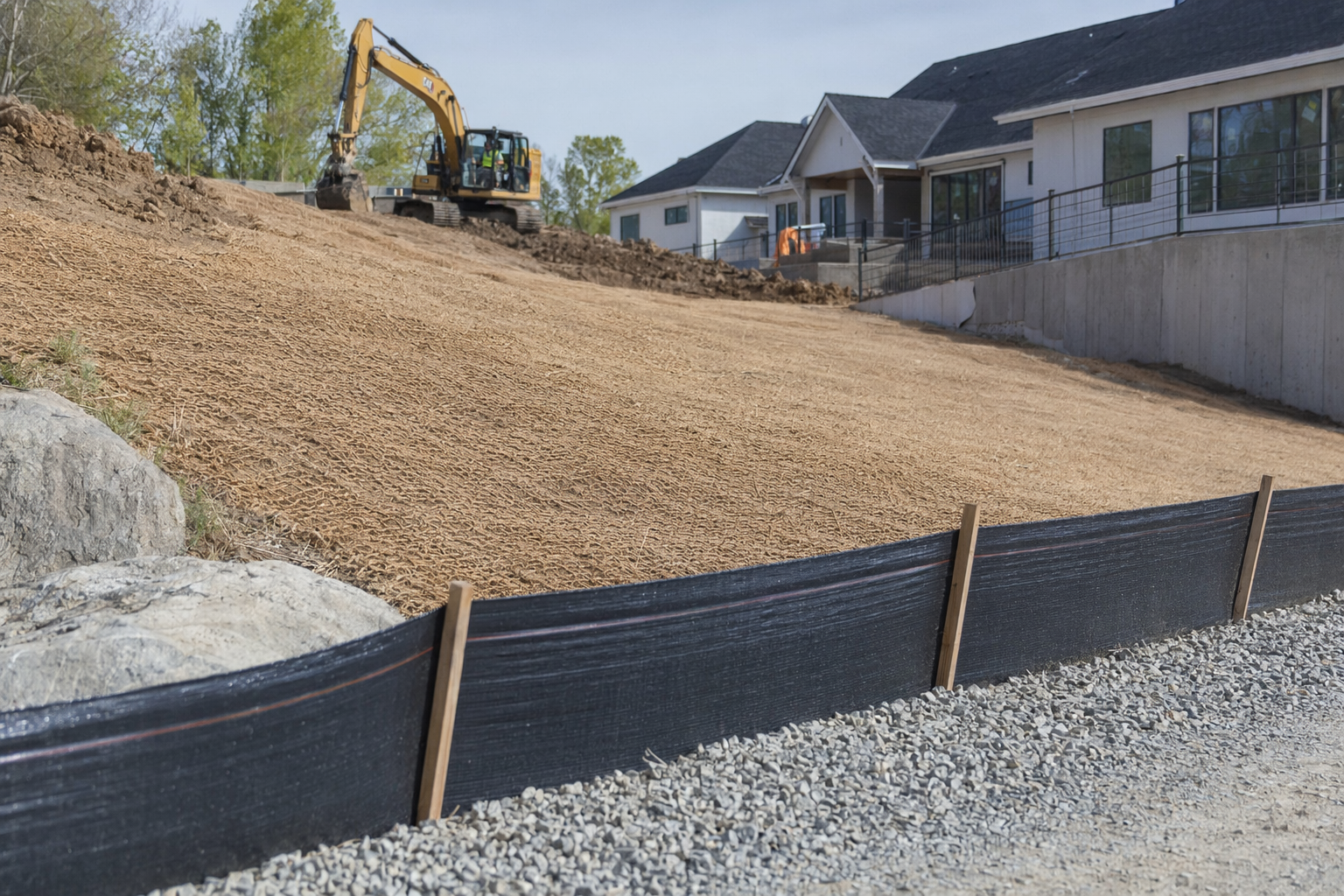
These are the barriers, drainage features, and reseeding steps that stop dirt from washing away during and after a project.
The short answer
When land is disturbed for excavation, cut and fill, a new building pad, trenching, or rough grade work, bare soil can wash away fast during rain or even heavy irrigation. That loose soil is called sediment once it starts moving, and it can clog storm drains, muddy nearby creeks, and create problems for adjacent properties.
Erosion control slows the water down. Sediment control catches the soil before it leaves the site. In real jobs, that often means a mix of silt fence, wattles, inlet protection, temporary swales, stabilized construction entrances, and then final steps like finish grade, topsoil, seed, mulch, or erosion-control blanket.
It adds time, materials, and labor to a project, so it affects cost. Typical ranges vary by site size, slope, soil type, and local rules, but even small jobs may need a few hundred to a few thousand dollars in protection and cleanup. Larger sloped sites can cost much more. These are not quotes, just common ranges. You can learn more about site-work pricing at [/costs/] and related work at [/services/land-grading/].
Rules vary by city, county, and state. Some places require a plan, inspections, or permits when enough soil is disturbed. Gradeline is a free education and contractor-matching service, not a contractor or engineer, so it is smart to confirm local requirements with your building department and hire a licensed, insured, bonded site-work contractor. And always call 811 before any digging so utilities can be marked.
What to look for
Start by looking at where water already wants to go. Does the lot slope toward the street, a low corner, the neighbor’s fence, or the house foundation? Good grading aims for positive slope away from the foundation and controlled flow toward a safe outlet, not random runoff across the site.
A solid erosion and sediment control setup often includes:
- Silt fence installed on the downhill side of disturbed soil, trenched in at the bottom instead of just staked on top
- Wattles or check berms to slow flow on slopes
- A swale to guide runoff where it should go
- Protection around storm drain inlets so mud does not wash straight into the system
- A stabilized entrance with rock to reduce mud tracked onto the road
- Topsoil, seed, mulch, straw, or blankets after final grading to stabilize the surface
Also look at the soil itself. Sandy soil drains differently than heavy clay. Fresh fill must be compacted in lifts if it is supporting grade changes, a driveway area, or a building pad. If runoff is pooling, a French drain, culvert, or reworked finish grade may be part of the fix, but the right solution depends on the site.
On a well-run job, erosion control is not an afterthought. The contractor should place it before major earthmoving with a mini-excavator, skid steer, or larger equipment, maintain it during the project, and repair it after storms. If you need help finding that kind of contractor, Gradeline can help you get matched with vetted local pros.
Common mistakes
One common mistake is putting up a silt fence incorrectly. If the bottom edge is not keyed into the soil, water simply runs under it and carries sediment with it. Another mistake is using silt fence where concentrated water flow is too strong. It is meant for sheet flow, not as a dam across a ditch.
Another problem is leaving bare soil exposed too long. A site may be rough graded, then sit for weeks waiting on the next phase. During that time, even one storm can wash out slopes, move fill, and create ruts that require regrading and more haul-off or imported material. Temporary stabilization matters.
Poor drainage planning is also a big issue. Water should not be directed toward the house, footing area, crawlspace, basement, or a neighbor’s lot. In some cases, owners focus only on moving dirt and forget about the final path of runoff after compaction and finish grade are complete.
Other mistakes to watch for:
- No stabilized entrance, leading to mud on the road and complaints from the city or neighbors
- No inlet protection near storm drains
- Using the wrong material, like loose fill where topsoil and seed are needed for stabilization
- Failing to maintain controls after rain, wind, or equipment damage
- Assuming a small project does not need protection because the disturbed area looks minor
If the site has deep cuts, steep banks, or trenching near structures, there may also be safety concerns beyond erosion control, including shoring or trench protection. That is work for qualified professionals, not a DIY guess.
Next steps
First, walk the property and note the basics: slope direction, low spots, nearby storm drains, neighboring yards, creeks, fences, and the areas where soil will be disturbed. Photos after rain are especially useful because they show how water really moves.
Next, ask contractors specific questions. Good ones should be able to explain what controls they would use, where they would place them, how they would maintain them, and what final stabilization will look like. Ask whether cleanup, reseeding, straw, erosion-control blanket, and storm-drain protection are included in the scope. Ask who handles permit-related inspections if required.
Then, verify credentials yourself. Hire licensed, insured, bonded contractors when your area requires it, and confirm they have experience with grading, drainage, and erosion-control work similar to your site. Gradeline is a free matching service and can help connect you with local contractors, but you should still check licenses, insurance, and references on your own. See [/guides/how-to-choose-an-excavation-contractor/] for a practical checklist.
Finally, do not let anyone start digging without utility locates. Always call 811 before excavation for a swale, culvert, French drain, trench, or any other site work. If you want help finding a qualified local contractor for grading or drainage-related work, start here: [/get-matched/].